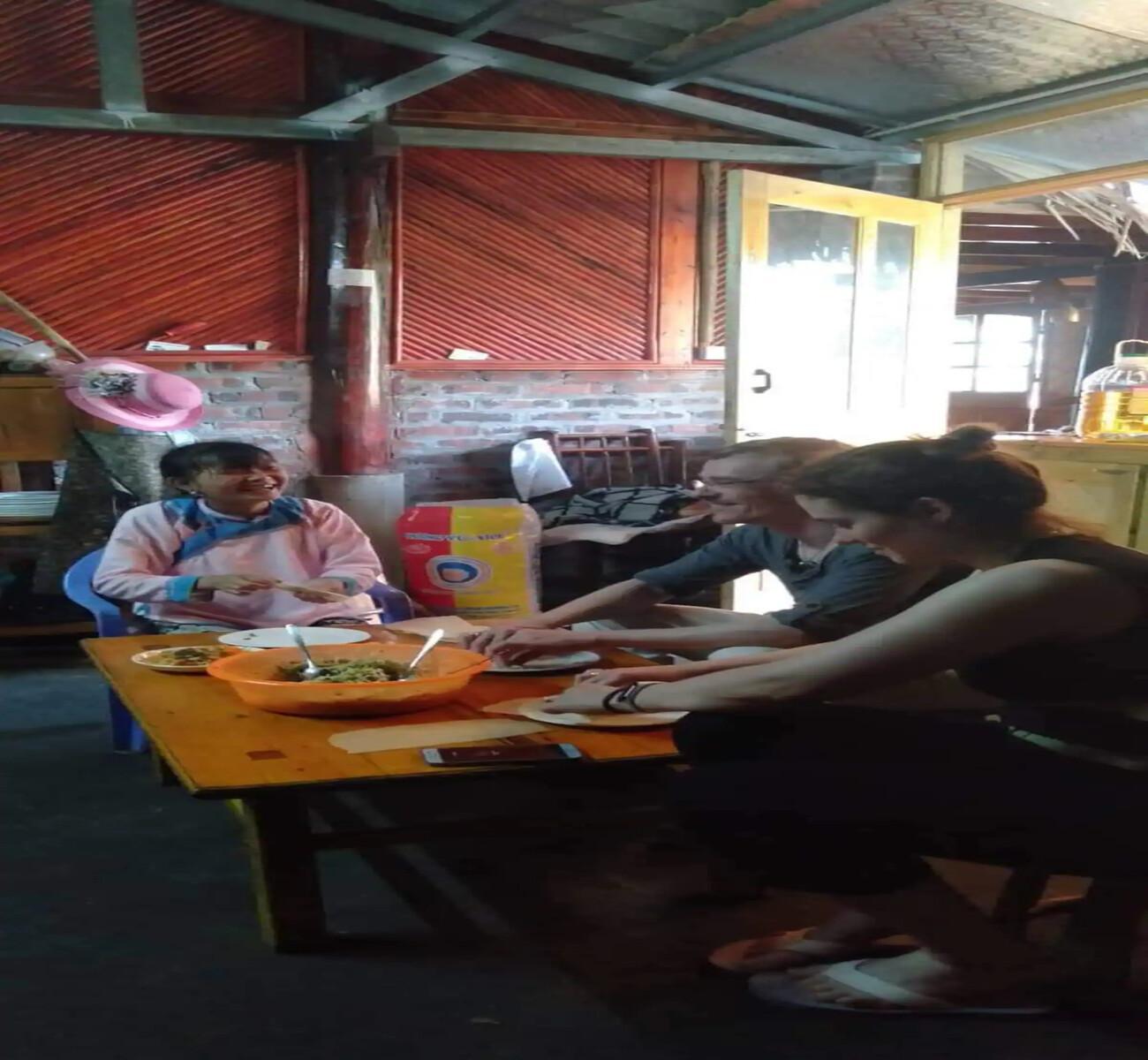
“Cooking class” means very different things depending on where you book it. In a hotel or restaurant, it usually means a chef demonstrating a few dishes in a kitchen built for tourists. At a family homestay, it means something closer to what it sounds like, you're cooking in someone's actual home, with their family, using food they grew themselves.
What you'll actually cook
A Hmong cooking class built around home cooking, not a restaurant menu, usually means hands-on dishes like spring rolls, bamboo shoots prepared with fresh herbs, homemade tofu, naturally coloured sticky rice, and rice grown on the family's own terraces. The exact menu on Sung's cooking class is listed in full on the tour page.
How long does it take?
Expect somewhere around 3–4 hours for a proper hands-on class, long enough to actually cook multiple dishes and sit down to eat them together, not just watch a 30-minute demo.
Why the setting matters
Cooking at a family homestay in the middle of rice terraces isn't just a nicer backdrop, it changes the conversation. You're likely to end up talking about daily life, farming, and Hmong culture with the family as you cook, which is a very different experience from a scripted hotel demo aimed at a rotating cast of tourists.
Is it worth it if you're not a “foodie”?
Yes, the cooking is really a way into the culture and the family, not the whole point. If you've already got a trek booked, a cooking class is a good way to spend a slower half-day that still feels genuinely local.